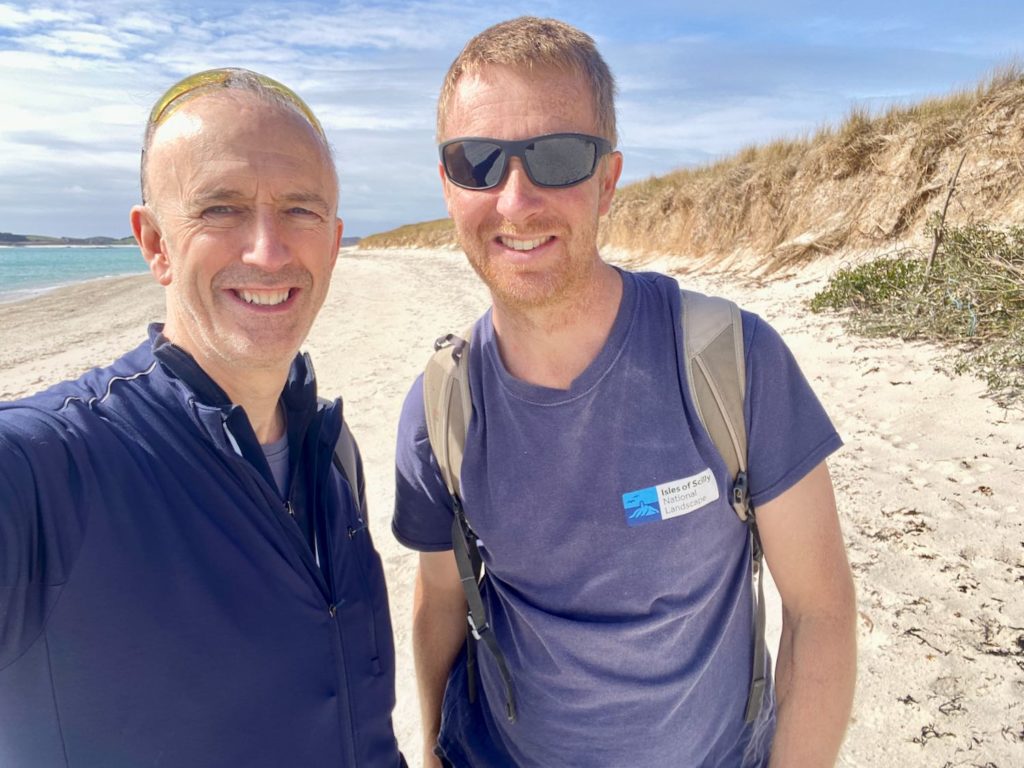



Set on the elemental edge of Isles of Scilly, Scilly Organics feels less like a farm and more like a quiet lesson in how food should be produced—and experienced. Here, on St Martin’s, Jonathan has built something that resists the noise of modern food culture. No overstatement, no theatre. Just land, season, and a clear sense of purpose.
During a recent fact finding visit to the Isles of Scilly, our founder James Day spoke to key producers on the islands about their challenges, ethos and future.
Much of the land he now farms lay untouched for decades.
“It hadn’t been used for… 25 years at least,” he says. “So in that sense, there was nothing artificial applied anyway.”
Organic certification followed—but almost as a formality. The real work is ongoing. Annual inspections, consistent practices, and a long-term view of soil health underpin everything.

Farming on the edge
Island farming strips things back. Inputs are limited, weather is dominant, and margins are tight. Yet it’s precisely these constraints that define the quality.
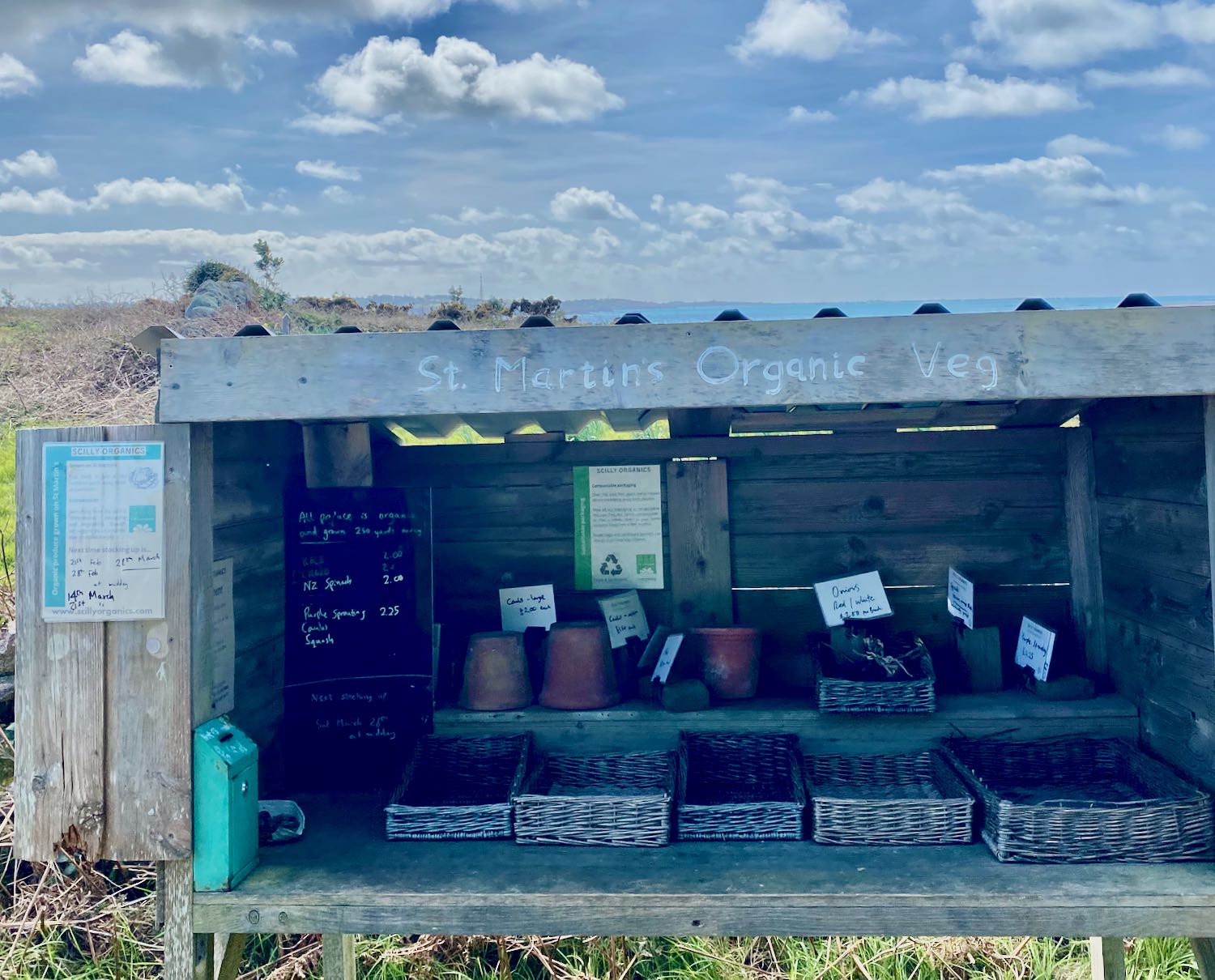
Vegetables account for around two-thirds of Jonathan’s output. Not through wholesale scale, but through a brilliantly simple model: an honesty stall.
“We stock it up in the morning. People come along, take what they want, leave the money.”
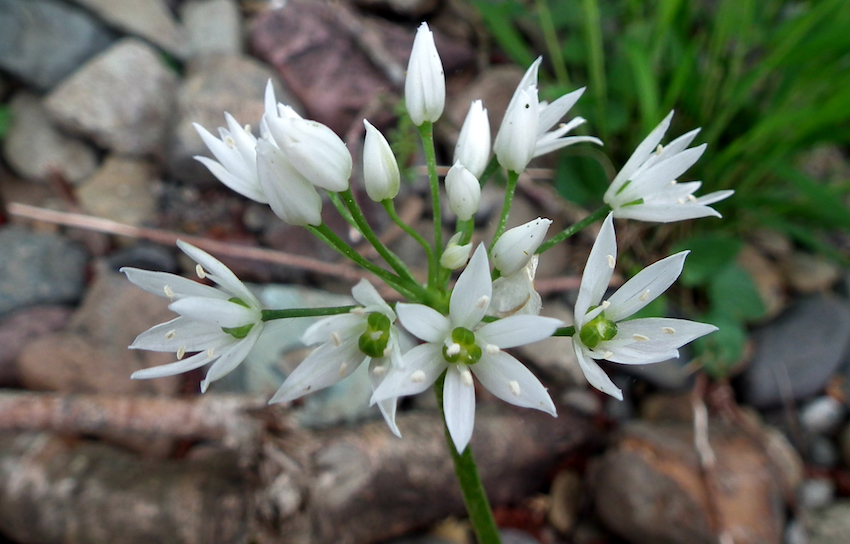
In peak season, it becomes the heartbeat of the island—fuelled by campers, walkers and returning visitors who build their meals around what’s available that day. Salad leaves, herbs, microgreens, potatoes—produce that speaks immediately of place.
The rest goes to a handful of local kitchens, including pubs and cafés across the islands, where chefs—when aligned—understand the value of what they’re buying.
Water, not power, is the real currency
Sustainability here isn’t a slogan—it’s survival.
“I don’t use a lot of electricity,” Jonathan explains. “Water’s the big issue. Or lack of.”
With sandy soils that drain fast and increasing periods of drought, irrigation becomes critical. Rainwater harvesting, boreholes, and improved soil structure all play a role—but even then, extremes are biting.
“Last summer we had four months of drought… by mid-July the leaves just went. You can keep them alive, but they don’t grow.”
After 20+ years on the land, he’s clear: the climate is shifting.
“We’re getting more extremes. More wet, more dry—and not much in between.”
Soil as strategy
Beyond the farm, Jonathan is part of something bigger—his work with Farm Carbon Toolkit reflects a growing shift across UK agriculture.
The principle is simple: healthier soils are the answer to multiple problems.
“Build organic matter,” he says. “It improves fertility, increases water holding capacity, and absorbs carbon from the atmosphere.”
It’s both mitigation and resilience—reducing emissions while buffering against increasingly volatile conditions. What was once niche is now necessity, driven as much by supply chains as by environmental urgency.
The reality behind ‘local’
Spend time with Jonathan and another issue surfaces—one the industry often avoids.
“Greenwashing? Yeah, I’ve definitely come across it.”
Menus claiming ‘local’ or ‘sustainable’ without accountability frustrate him—not out of ideology, but because it undermines those doing the work properly.
“You can’t fake it here,” he says. “If it’s on the plate, it’s because it’s been grown or sourced nearby.”
Equally telling is the opposite problem: producers supplying excellent ingredients that never make it onto the menu narrative.
“Some places take my stuff—but don’t promote it. I find that strange.”
A different kind of destination
Scilly Organics is also quietly diversified. A single yurt, set just back from the beach, offers a stripped-back stay—simple, considered, and entirely in keeping with the farm.
For visitors, the experience is unstructured but deeply memorable. Walking the coastal path, passing fields of greens and polytunnels of early peaches and grapes, picking up produce from the stall—it becomes part of the rhythm of being on the island.
“They really enjoy it,” Jonathan says. “It’s part of their holiday.”
Why it matters
In a hospitality world chasing scale, Scilly Organics offers something more valuable: clarity.
- Food grown with purpose, not volume
- Sustainability driven by necessity, not marketing
- Experience rooted in place, not design
For chefs and operators, the message is straightforward—understand your supply chain, respect your producers, and communicate it honestly.
For everyone else, it’s simpler still: this is what food looks like when nothing is hidden.